
US Endorsement and Electoral Tensions: JD Vance Enters Hungary’s Campaign Debate
Foreign support, EU criticism, and geopolitical disputes intensify the stakes ahead of Hungary’s elections
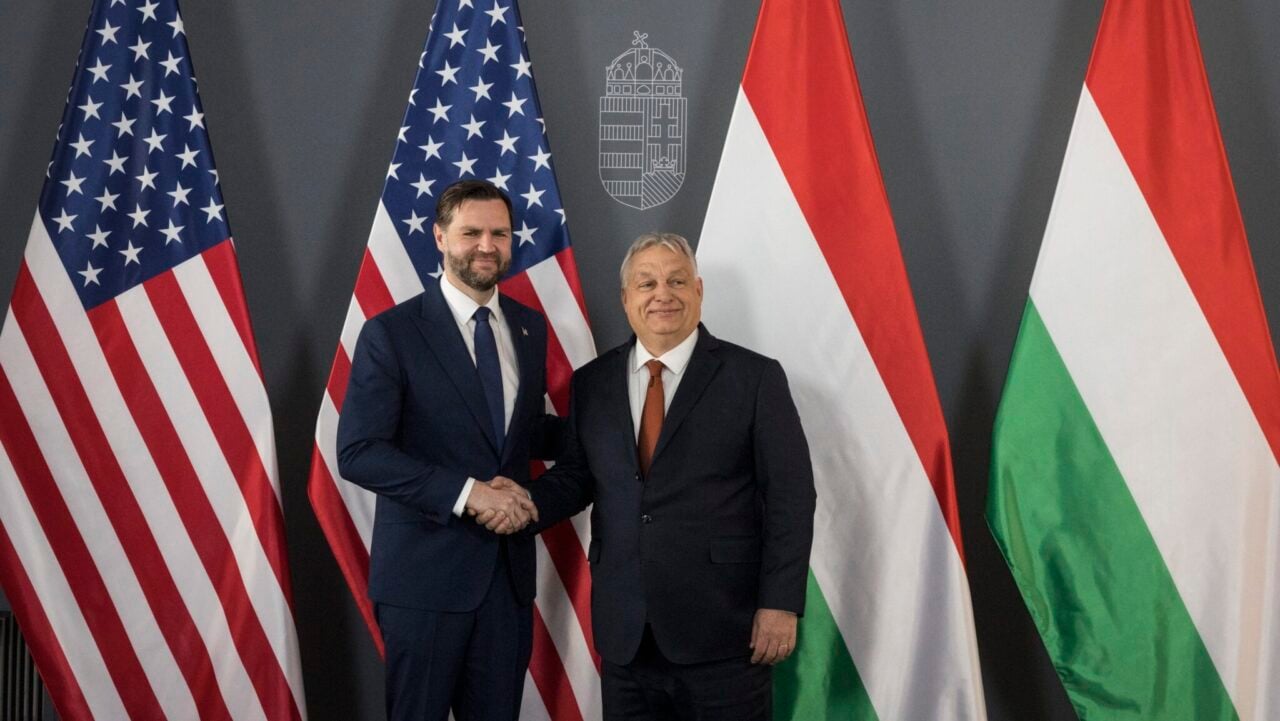
Just days before Hungary’s parliamentary election, a high-profile visit by the US vice-president introduced a new dimension to the campaign. His appearance alongside the incumbent prime minister represented a direct form of external political endorsement (külső politikai támogatás) and added weight to ongoing debates about foreign influence in elections (külföldi befolyás a választásokban). While stating that cooperation would continue regardless of the outcome, his explicit support underscored the international significance of the vote.
The visit marked the first senior-level US trip to Hungary in two decades, highlighting a renewed phase of bilateral relations (kétoldalú kapcsolatok) between the two countries. Hungarian officials described the relationship as entering a “new golden age,” reflecting a broader alignment built on shared political positions and strategic interests. This development illustrates a pattern of transatlantic alignment (transzatlanti igazodás) shaped by both ideological and geopolitical considerations.
During joint appearances, criticism of the European Union became a central theme. The US vice-president accused EU institutions of engaging in “one of the worst examples of foreign election interference that I have ever seen or ever even read about... because they hate this guy.” He further stated that “interference that's come from the bureaucracy in Brussels has been truly disgraceful,” framing the issue within a narrative of institutional overreach (intézményi túllépés) and political interference (politikai beavatkozás).
Speaking at a campaign rally, he reinforced this message by emphasising voter autonomy: “We want you to make a decision about your future with no outside forces pressuring you or telling you what to do.” Although he added, “I'm not telling you exactly who to vote for,” he concluded by urging voters to “stand with Viktor Orbán, because he stands for you.” These remarks highlight the role of campaign rhetoric (kampányretorika) and electoral persuasion strategies (választási meggyőzési stratégiák) in shaping public opinion.
At the same time, opposition figures responded by signalling openness to continued cooperation with the United States, regardless of electoral outcomes. This reflects an effort to maintain foreign policy continuity (külpolitikai folytonosság) while repositioning within the broader international framework. The election has thus become not only a domestic contest but also a focal point for competing visions of Hungary’s international alignment (nemzetközi igazodás).
Energy and security issues have further intensified the campaign environment. Hungary’s reliance on Russian oil and gas, combined with disruptions affecting key supply routes, has underscored vulnerabilities in energy dependency (energiafüggőség) and supply chain stability (ellátási lánc stabilitása). Government responses, including the use of reserves and alternative import routes, highlight the practical challenges facing policymakers during a period of geopolitical tension.
Allegations and counter-allegations have also contributed to a charged atmosphere. Claims regarding possible sabotage near a gas pipeline, as well as competing narratives about responsibility, reflect broader concerns about information warfare (információs hadviselés) and security narratives (biztonsági narratívák). These issues intersect with electoral politics, influencing public perception in the final days before voting.
Further controversy has emerged from leaked communications involving senior officials. Reports suggest that confidential discussions from European Union meetings were shared with foreign counterparts, raising questions about diplomatic conduct (diplomáciai magatartás) and information security (információbiztonság). Officials have defended these actions as standard practice, describing them as “normal diplomacy,” while critics view them as evidence of deeper alignment with external powers.
Long-standing concerns about governance have also resurfaced during the campaign. Hungary has been characterised by international observers as exhibiting traits of a hybrid political system (hibrid politikai rendszer), and issues such as corruption and media concentration remain central to debates about institutional integrity (intézményi integritás) and rule of law standards (jogállamisági normák). The withholding of European Union funds has further underscored these tensions.
Despite sustained support from international allies, the current leadership faces a highly competitive election. The convergence of domestic dissatisfaction, geopolitical pressures, and external endorsements has created a complex electoral landscape. The outcome will determine not only the direction of Hungary’s internal governance but also its future position within evolving global political dynamics (globális politikai dinamika).
For requests or suggestions: pr@hungarianinstitute.com

Learn the official language of Hungary in 30 days thanks to the most complete Grammar, Vocabulary and Culture course available.
Start speaking Hungarian today!
© Copyright 2026 Hungarian Institute
Come visit Hungary!